- What is intermittent fasting, and how does it work?
+
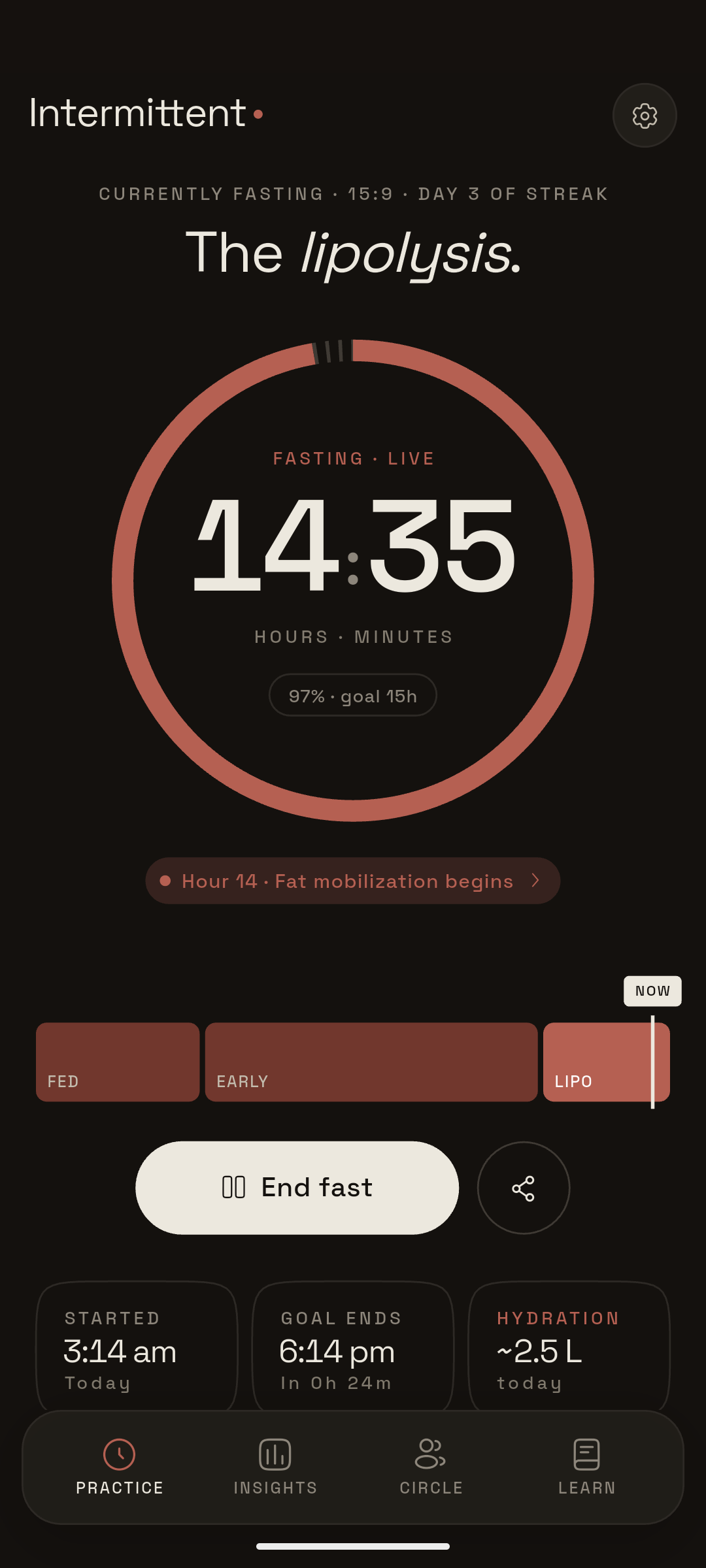
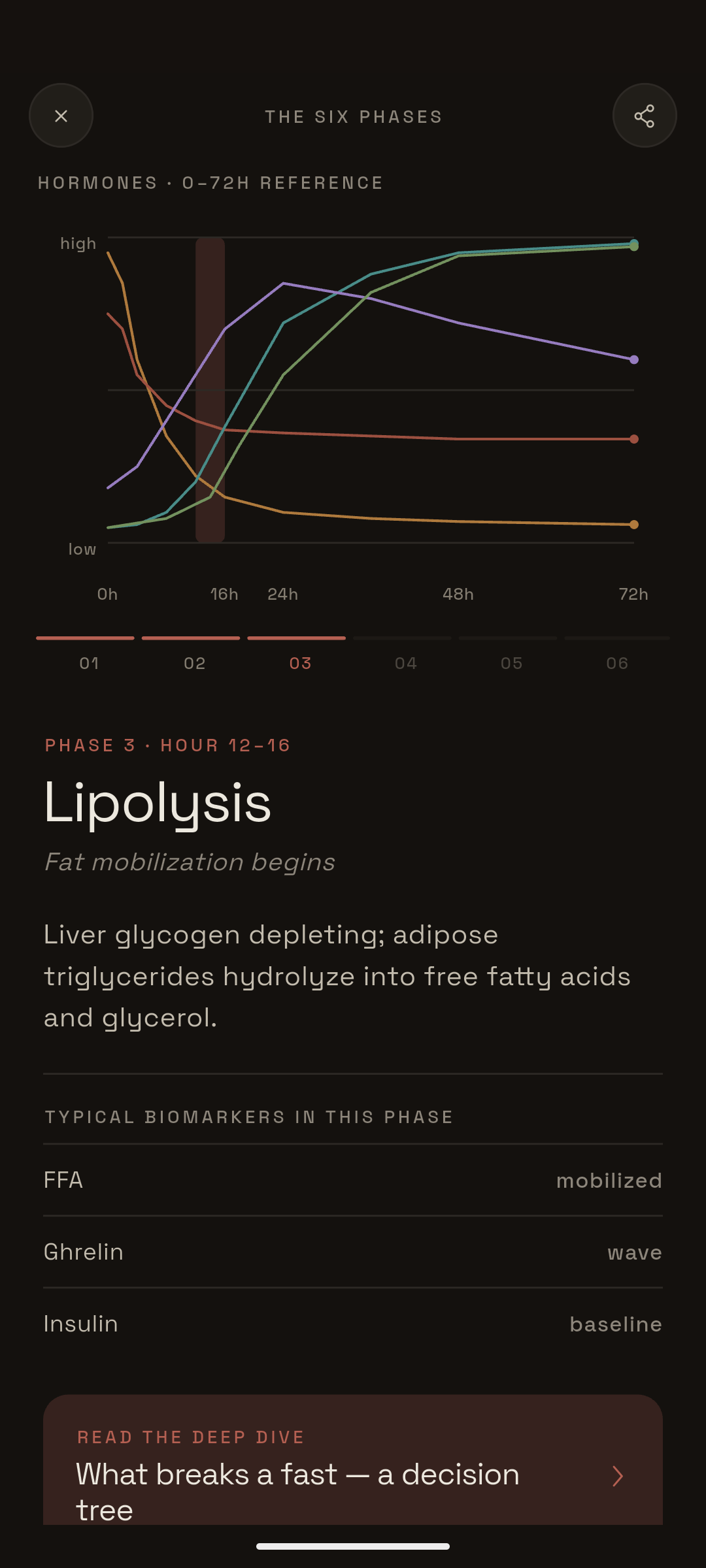
- Intermittent fasting is eating within a time-restricted window and not eating for the rest. When you stop eating, insulin falls and the body passes through six biological phases — Fed, Early fasting, Lipolysis, Ketosis, Autophagy, and Deep fast — each with different fuels and hormonal changes. The phase you reach depends on how long you fast.
- What is the 16:8 intermittent fasting schedule?
+
- 16:8 means fasting for 16 hours and eating within an 8-hour window each day. A 16:8 fast passes through Fed, Early fasting, and Lipolysis, reaching Ketosis right at hour 16. It is the most common daily intermittent fasting protocol — a balance between reaching fat metabolism and fitting normal life around it.
- What are the common intermittent fasting schedules, and how long should I fast?
+
- Common daily schedules run from 12:12 (gentle) up through 14:10, 16:8, 18:6, 20:4, and OMAD (one meal a day). Longer extended fasts run 24, 36, 48, and 72 hours. Beginners usually start at 12:12 or 14:10 and ramp up over a few weeks. Longer fasts reach deeper biological phases.
- Does intermittent fasting actually work? What does the research say?
+
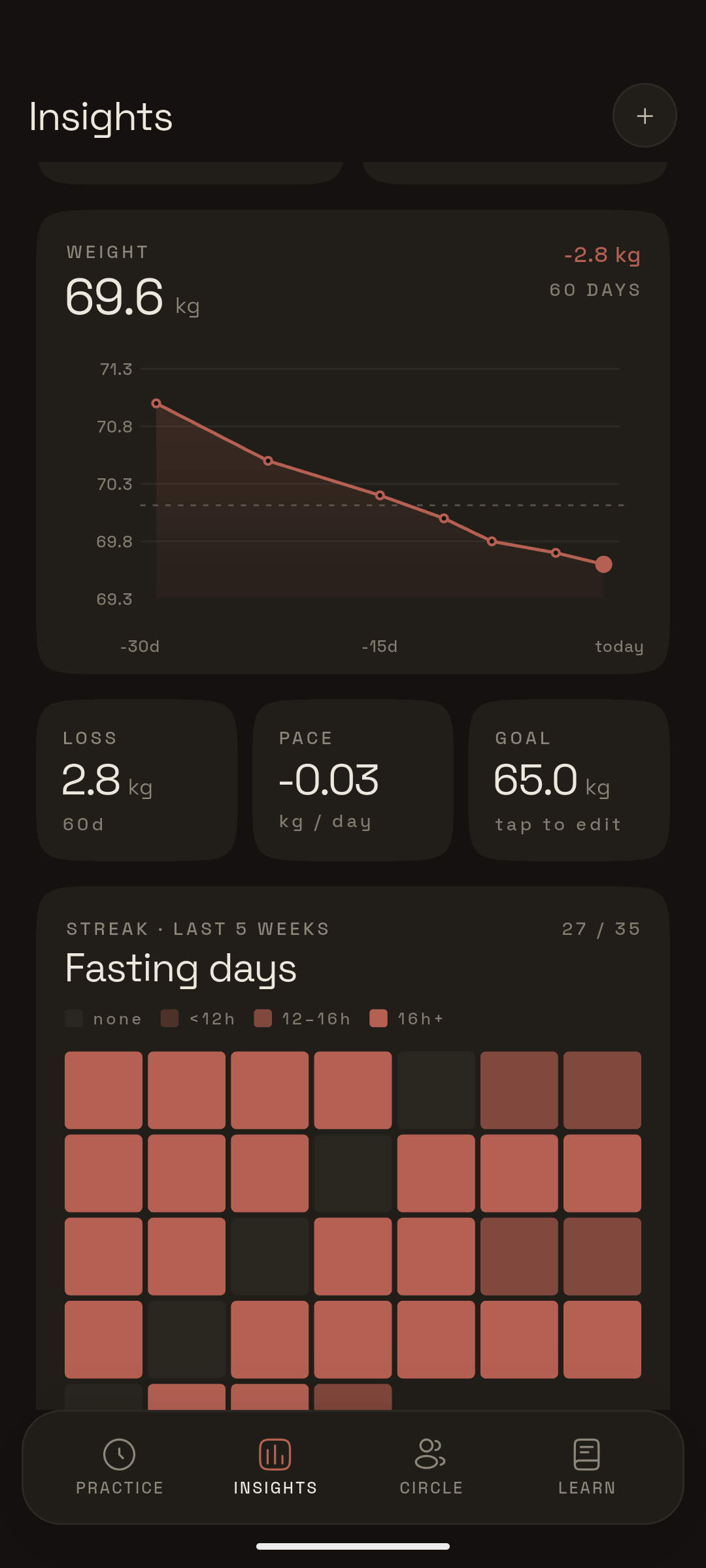
- Research supports intermittent fasting for metabolic flexibility, insulin sensitivity, and short-term weight loss. Long-term outcomes are mixed and depend more on what you eat in your window than on the fasting itself. The strongest evidence is mechanistic — the six-phase biology is well-characterised — and individual response varies.
- What can I drink while fasting? Does coffee break a fast?
+
- Water, plain tea, and black coffee do not meaningfully break a fast — they carry no calories and do not spike insulin. Milk, cream, sugar, juice, and alcohol do break a fast. Diet soda is a grey area: no calories, but some evidence it affects insulin response through taste receptors.